
If you’ve ever sat at a desk for eight hours straight, craning your neck toward a laptop screen, then wondered why you ended the day with a throbbing head, you’re not alone. The link between bad posture and headaches is more real than most people realize—and unfortunately, it doesn’t take much forward head slouching to feel the effects.
At The Head and Neck Centers of Excellence, we see this every day: patients battling headaches that aren’t caused by dehydration or skipped meals—but by the way their neck is positioned while they check emails, or scroll on their mobile devices.
Let’s break down what’s actually happening.
Can Bad Posture Cause Headaches?
Short answer: yes. Longer answer: absolutely, and here’s how.
When your posture shifts out of alignment—whether from slumping, leaning forward, or just being glued to your phone all day—your muscles don’t shrug and move on. They compensate. And they do it silently at first, and then with vengeance.
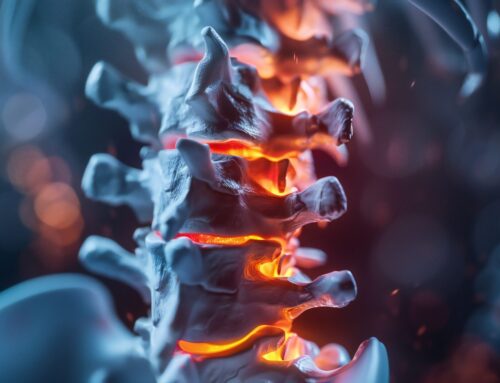
Muscles in the upper back and neck tighten to hold your head in place, creating a chain reaction of tension. This kind of stress on the neck and shoulders doesn’t just stay there—it radiates upward, often resulting in pulling delicate soft tissues that can lead to tension headaches that can feel like a band squeezing your skull.
So, can bad posture cause headaches? Definitely. And it’s not just uncomfortable—it can be a sign your body’s structure is under chronic strain.
How Forward Head Posture Contributes to Tension Headaches
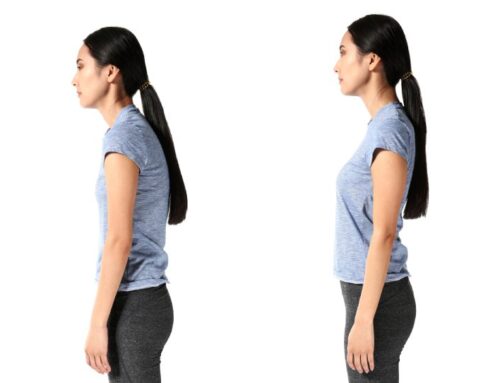
Let’s get a little more specific. Forward head posture (also known as “tech neck”) happens when your head drifts in front of your shoulders—sometimes just by a few millimeters. Doesn’t sound like much? It is. For every inch your head moves forward, the weight on your neck muscles doubles. That means what was once a 10-12 lb head suddenly feels more like 30.
Over time, this misalignment can compress the cervical spine, limit range of motion, limit flexibility and—surprise—fires up your nerves and muscles enough to bring on constant headaches. It’s one of the most common issues we treat at the Head and Neck Centers of Excellence, and it’s usually hiding in plain sight. Patients often tell us they’ve tried everything for their headaches—except looking at their posture.
The Best Ways to Improve Posture and Reduce Pain
Here’s the good news: you’re not doomed to a life of neck strain and ibuprofen.
There are proven ways to improve posture that can relieve the tension that can be causing those headaches. These include:
- Postural awareness – Noticing when your head starts to jut forward is the first step. Spoiler: it’s probably already happening as you read this.
- Ergonomic corrections – Small changes like adjusting your chair height, screen angle, or keyboard position can dramatically reduce strain.
- Corrective exercises – Strengthening the muscles that support upright posture (think upper back and deep neck flexors) helps restore balance.
- Spinal therapy and adjustments – That’s where we come in. We use Chiropractic BioPhysics, a research-backed approach that goes beyond short-term relief and helps structurally correct posture over time.
If you’ve tried “sitting up straight” and nothing’s changed, you’re not the problem. The methods you’re using probably are.
Using iTrac Therapy to Correct Posture and Alleviate Headaches
One of the most effective tools we use at the Head and Neck Centers of Excellence is iTrac Therapy. If you haven’t heard of it, don’t worry (most people haven’t). And frankly, most clinics don’t even offer it.
iTrac is an FDA-approved cervical disc stretching system designed to reverse forward head posture and restore the neck’s natural curve. By applying gentle, computer-controlled traction, at specific angles custom to the individual, it reduces compression on spinal discs and relieves pressure on the nerves that are often responsible for chronic tension and headaches.
In short: it doesn’t just feel good—it works. It’s passive (you just lie there), precise, and trackable. And it’s part of a bigger treatment plan that includes our A.S. Remodeling Protocol®—a three-part approach that addresses the structural, muscular, and nutritional root causes of your pain.
Patients dealing with constant headache treatment often feel like they’re chasing symptoms. With iTrac Therapy and our team’s diagnostic-first approach, we stop the cycle at the source.
At the Head and Neck Centers of Excellence, we don’t treat your pain—we correct the reason it exists. Our posture-based therapies, including poor posture treatment and iTrac Therapy, help patients reclaim their lives from chronic discomfort.
Whether you’ve been battling migraines, neck stiffness, or just a lingering pressure that no amount of stretching seems to fix, it might be time to take a hard look at your alignment. Don’t wait for the next headache to hit. Bad posture and headaches don’t fix themselves.
Contact us today to see if you qualify for treatment and find out how we can help you live without the pain.